Technical Journal
Brief History of Windsurfing
The concept of windsurfing first originated in 1962 from a conversation between two aeronautical engineers, Jim Drake and Fred Payne. Both were enthusiasts of surfing and skiing. Since they rented a cottage on the banks of the Potomac River, these two engineers, well-versed in aerodynamics and aeronautical dynamics, began conceptualizing a "kite-powered water ski" and a "kite-powered surfboard" to sail on the Potomac during their holidays. However, because kite manufacturing technology was not as mature as it is today, the idea remained just a concept.
In the first five years of the 1960s, two other individuals also laid the groundwork for the development of windsurfing. Peter Chilvers, only 12 years old at the time, had a sudden inspiration while vacationing with his family on Hayling Island. He took a wooden door, inserted a pole into a hole in the door, attached a piece of canvas as a sail, and pushed this contraption into the water, standing on the door to cruise the river. Around 1965, Newman Darby, living in the Midwest USA, followed a similar approach. He made a large kite and inserted the central frame into the middle of a surfboard as a mast, creating a one-person toy that was neither a raft nor a sailboat. To allow the sail to adjust its angle to the wind, he developed a "universal joint" that could rotate and bend 360 degrees to connect the board and the mast. This "kite board" did not gain much public attention because it was difficult to operate.
In 1966, at a party in Southern California, Jim Drake mentioned his windsurfing concept to Hoyle Schweitzer, a talented surfer. Hoyle was highly interested. The two went to a local surfboard factory to pick suitable boards for their project. Drake built a universal joint, abandoned the 1962 kite idea, and adopted the same one-person sailing concept as Chilvers. With the help of local sailmaker Bob Broussard, they built the world's first "windsurfer" in May 1967.
During the first water test, they didn't know how to pull the sail up while on the water, so Bob had to stand in the water and hand the sail to Jim on the board—it took two people to start. For the second test, they added an "uphaul line," solving the single-operator problem. The core elements of modern windsurfing were thus complete.
Drake wrote a scientific report on the mechanics of windsurfing and presented it at the first American Institute of Aeronautics and Astronautics (AIAA) symposium in 1969. Later, under the marketing efforts of Hoyle and his wife Diane Schweitzer, windsurfing became a popular new water sport in Europe and America.
Whenever someone praises Jim as the "Father of Windsurfing" or the "Inventor of Windsurfing," he modestly declines, saying he is merely a "re-inventor." Although he hadn't heard of the other two inventors' ideas at the time, and their inventions weren't entirely "successful," he believes they were the first and second inventors since they preceded him by several years. He considers himself the third "re-inventor."
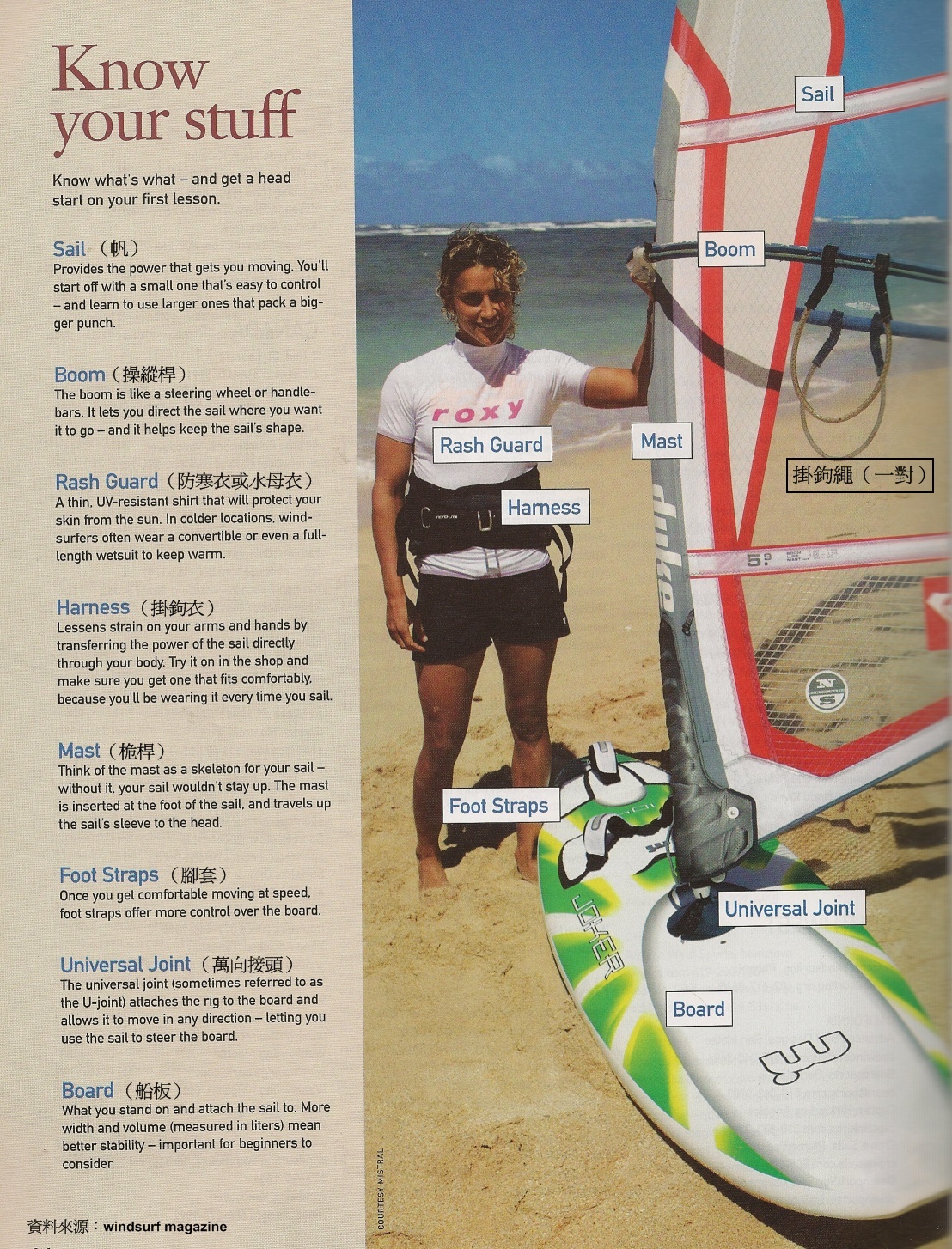
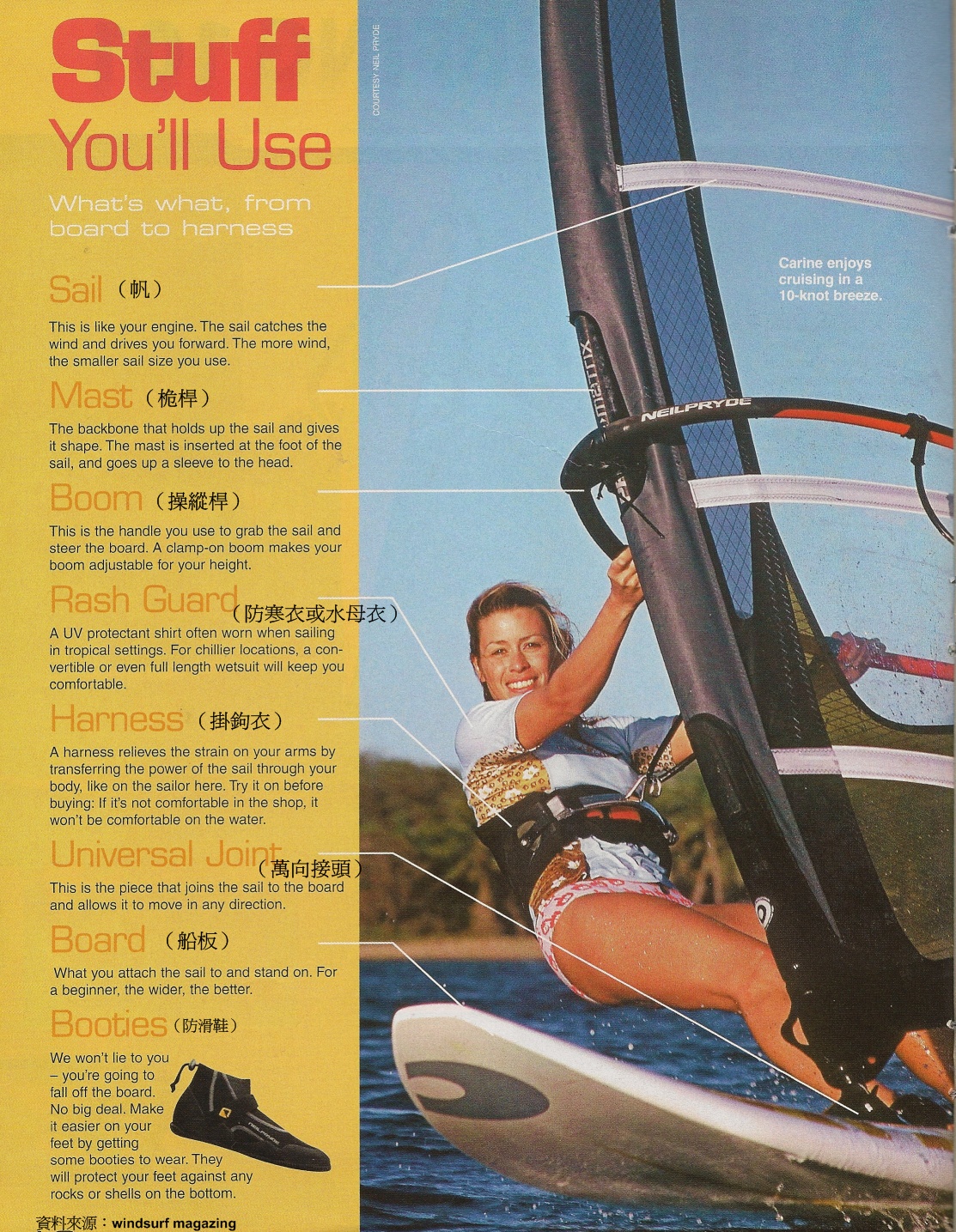
Basic Structure of Windsurfing